
A distinctive Montessori approach helps every child develop strategies to acquire knowledge, skills and values, at their own pace, and through their own hands. Here is how our classroom is prepared.
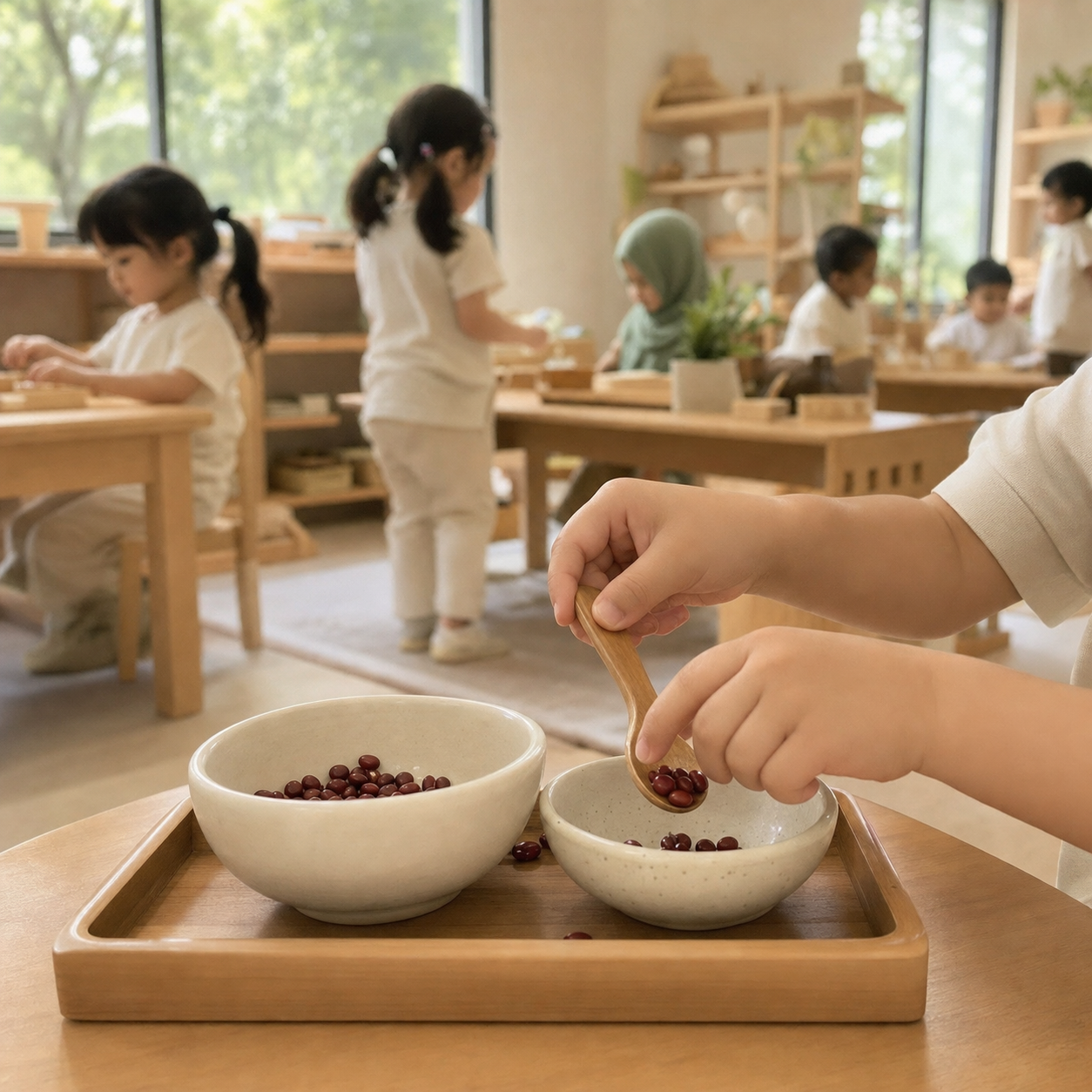
Practical life activities are based on actions a child can observe in their daily environment, pouring water from a jug, scooping, buttoning, tying laces. Children recognise these activities and relate them to what they see their families doing at home. The aim is to build order, concentration, coordination and independence.
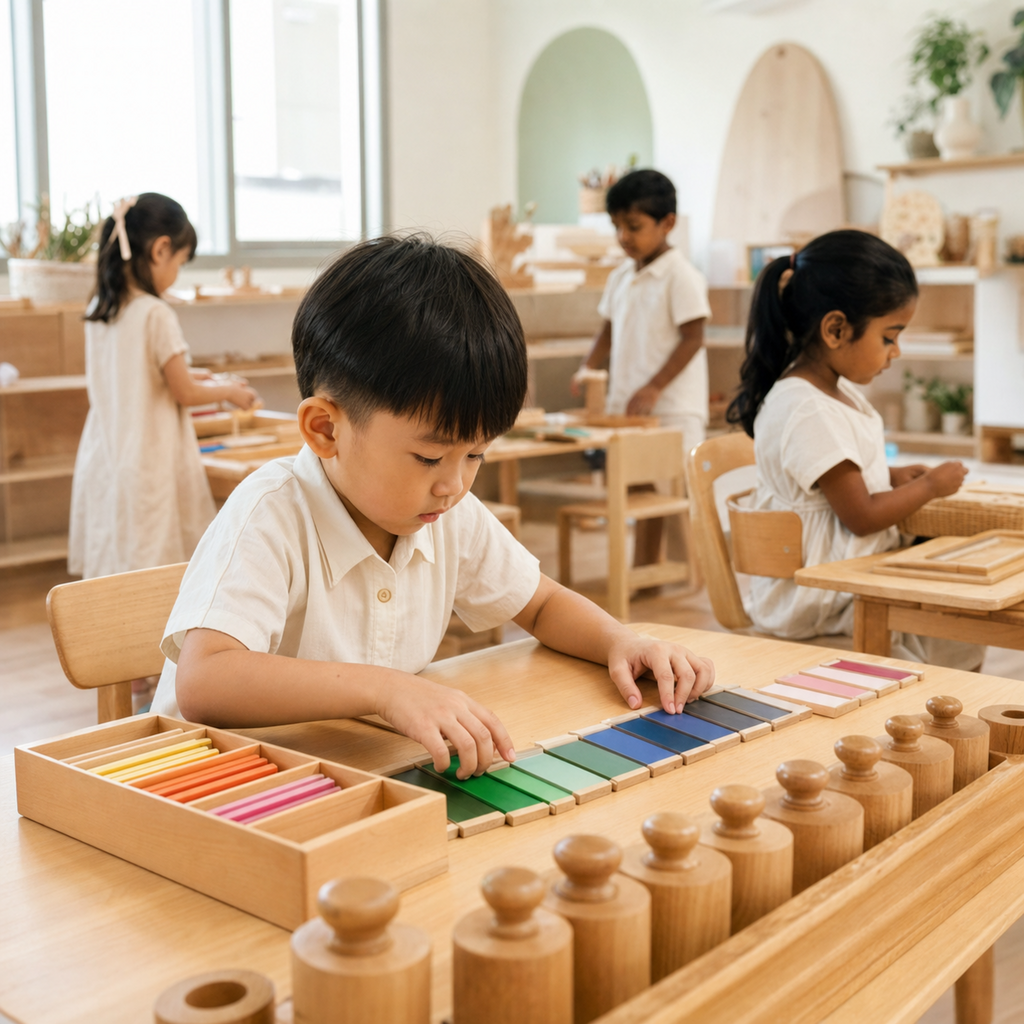
Young children learn and discover through the active use of all their senses. Sensorial activities are designed to help them refine and further develop each one. Beyond the five senses, this includes the sense of weight, temperature, form and shape, explored through precise, beautiful materials.
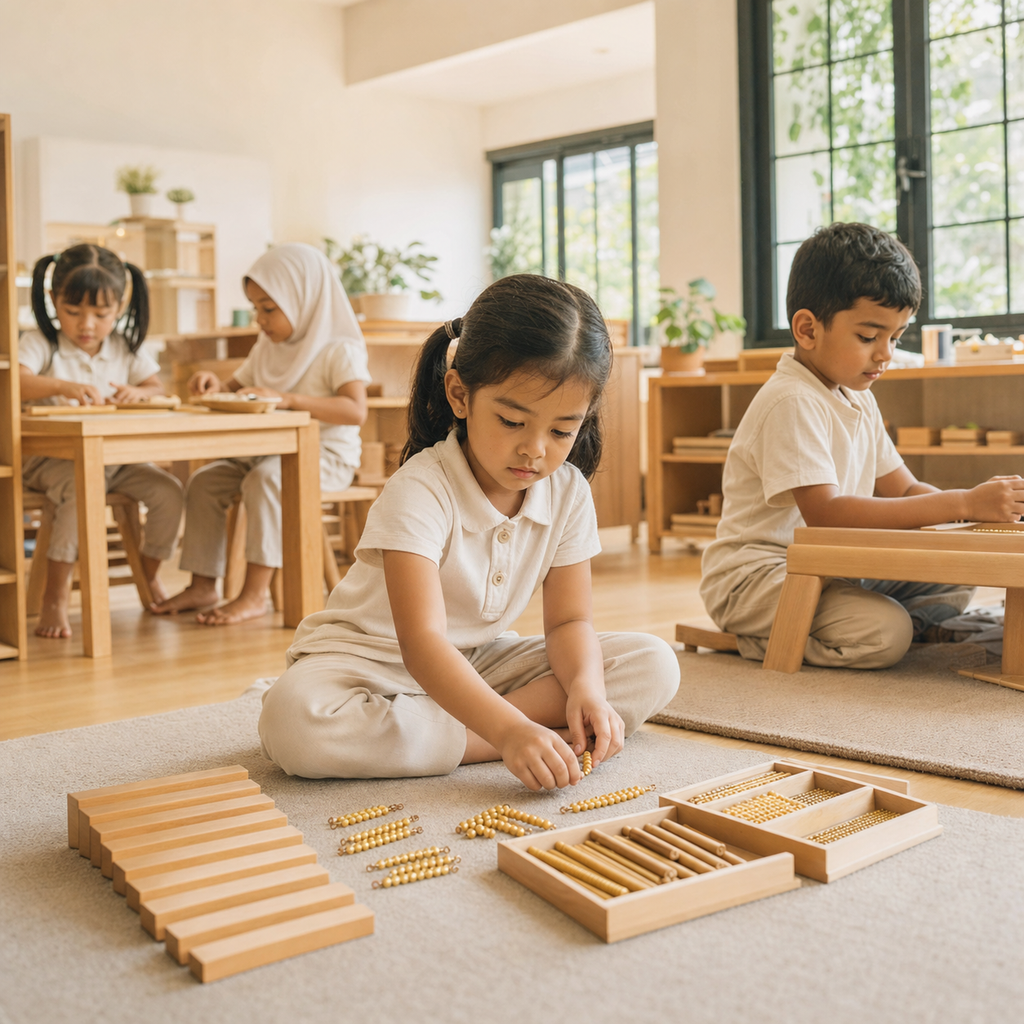
The Montessori approach to mathematics helps a child learn abstract concepts through tangible apparatus such as the Montessori math beads and number rods. Children are first introduced to numbers and counting, before moving on to more abstract operations such as addition, always grounded in the concrete.
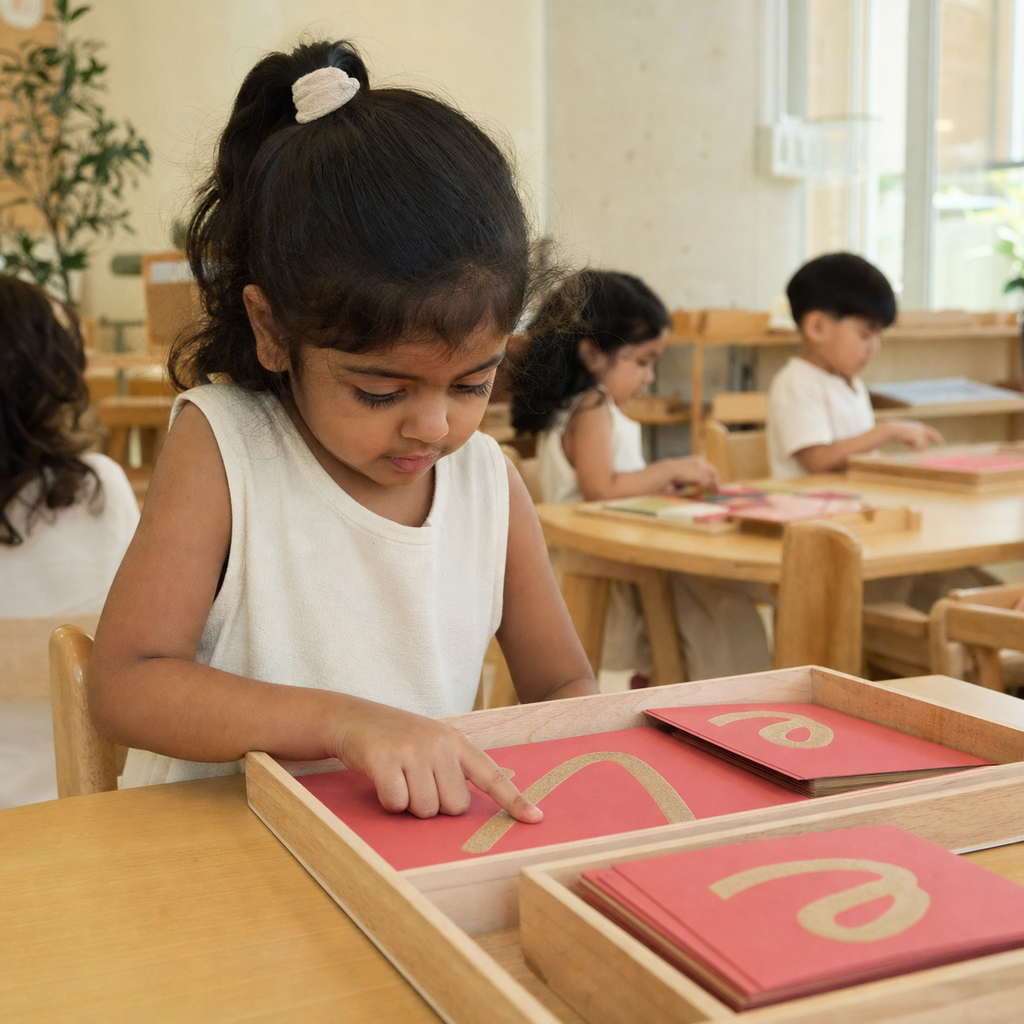
The early years are formative for a child's development of language. The Montessori method uses a systematic yet broad-based approach, beginning with oral language, where teachers name many things and use rich vocabulary, then progressing through sounds, sandpaper letters, and the joy of early writing and reading.
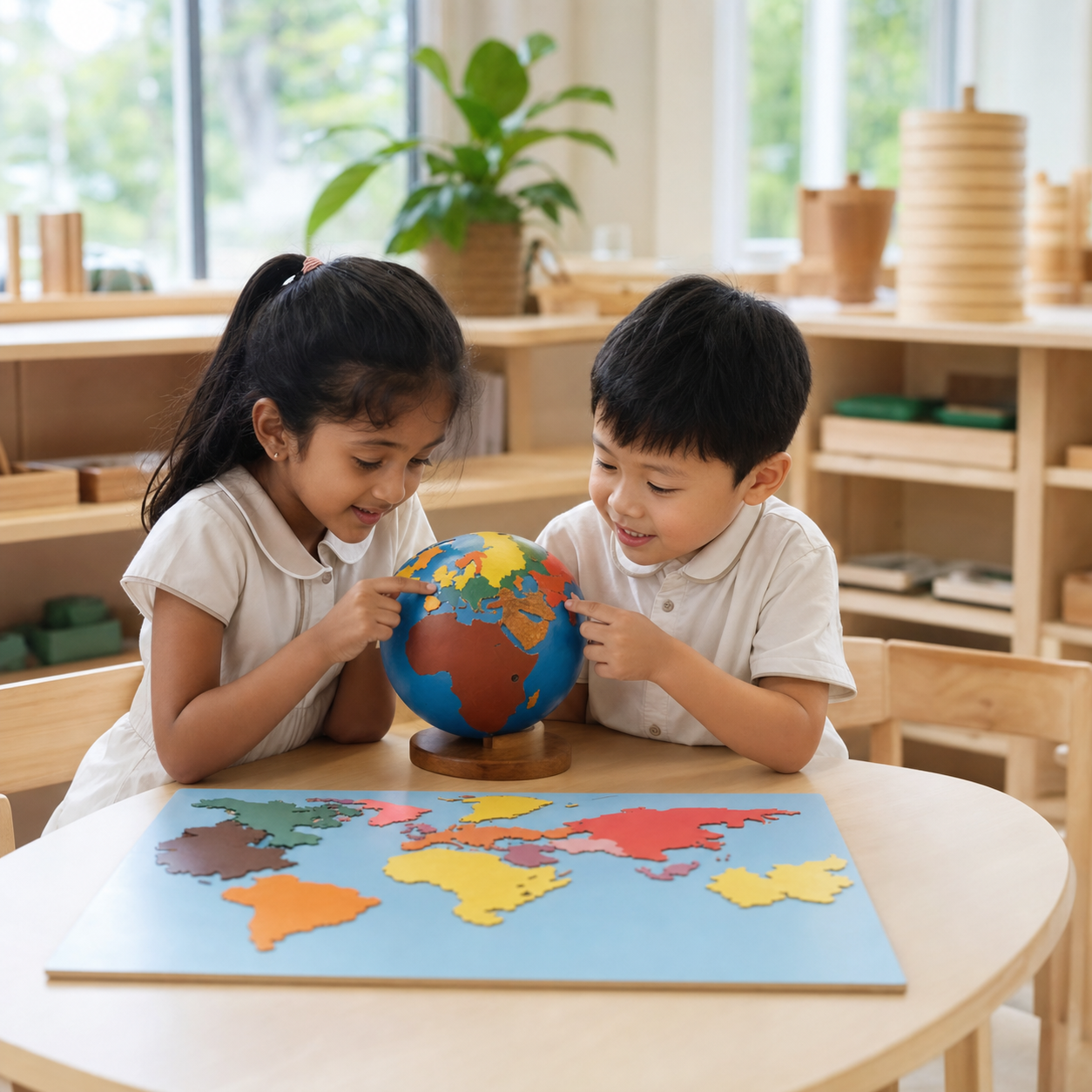
The culture curriculum comprises mainly topics from the Sciences, Geography and the Arts. It is an amalgamation of what we observe in the natural world and what we create in the arts, increasing children's exposure to, and understanding of, the world around them.
Nothing explains Montessori like watching a child at work. Come for a complimentary 2-day trial.